- Water Filtration System Suppliers In UAE
- +971-544942902
- Info@innovators-dubai.com
Deionized water (DI water, DIW or de-ionized water) is water that has almost all of its mineral ions, such as cations like sodium, calcium, iron, and copper, and anions such as chloride and sulfate removed. DI Water is the water of choice in many factories and manufacturing settings. It is commonly used in medical, food processing, chemical and semiconductor industry including, industrial cooling applications and manufacturing of cosmetics.
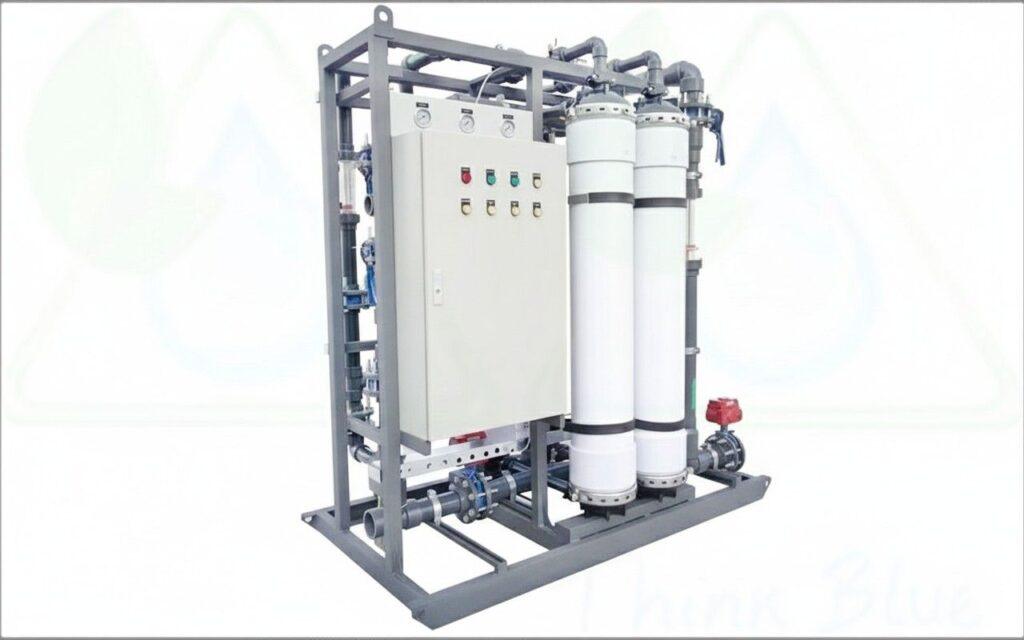
De-ionization is the removal or reduction of positive ions called cations and negative ions called anions from the water supply. High purity water from 50 to 1 MICROSIEMENS/CM or better can be produced from typical water sources. The cation resin is converted to the hydrogen form and exchanges positive ions for hydrogen. The Anion resin is converted to the hydroxyl form and exchanges the negative ions for hydroxyl.
Resins are designed specifically for deionizer applications, and typically regenerating with 6.4 lbs of 100% HCI per Cubic foot of cation resin and 8.0 lbs. of 100% NaOH per cubic foot for anion resin. Lakeside resins provide high chemical and physical stability, lower pressure drop and greater resistance to bead breakage. Strong or weak base resins are selected based upon the customers water quality requirements. Type 1 or 2 Anion resins are selected based upon the silica residuals required for the specific application. Standard systems utilize pressure compensating educators for drawing chemical.
De-ionization is the removal or reduction of positive ions called cations and negative ions called anions from the water supply. High purity water from 1.0 to 18.3 megaohms/cm and a silica level of .10ppm to 0.01ppm or lower can be produced. The cation resin is converted to the hydrogen form and exchanges positive ions for hydrogen. The Anion resin is converted to the hydroxyl form and exchanges the negative ions for hydroxyl.
Resins are designed specifically for deionizer applications regenerating with approximately 6.4 pounds of 100% of HCI per cubic foot for cation resin and 8.0 pounds of 100% NaOH per cubic foot for anion resin. Lakeside resins provide high chemical and physical stability, lower pressure drop and greater resistance to bead breakage. Type 1 Anion resins are standard to produce the lowest silica leakages and 10% cross-linked cation resins for durability and performance. Standard Cation regeneration is with 32% HCl. Standard systems utilize pressure compensating educators for drawing chemical. We recommended that the total chloride and sulfate content in the dilution water should be below 25 ppm to minimize the corrosion potential. Hard minerals and salts in dilution water can increase metal corrosion, cause formation of scale and deposits
Model no: UT-215-6
Type: De-ionization(DI) Post Water Filter
Diameter: 53 MM
Length: 254 MM
Max Flow Rate: L/24HR
Max Pressure: 4 BAR
Capacity: About 500 Gallons
DI is Demineralization by Ionization. A DI filter removes the few mineral ions that make it through the RO membrane; this makes sure that the water is as pure as possible. The DI filter also removes nitrates that are not removed by the membrane. The DI filter is a cartridge filled with an ion exchange resin in the form of small beads. When the water passes by the beads, the minerals and other ions leave the water and attach to the beads.
WhatsApp us